
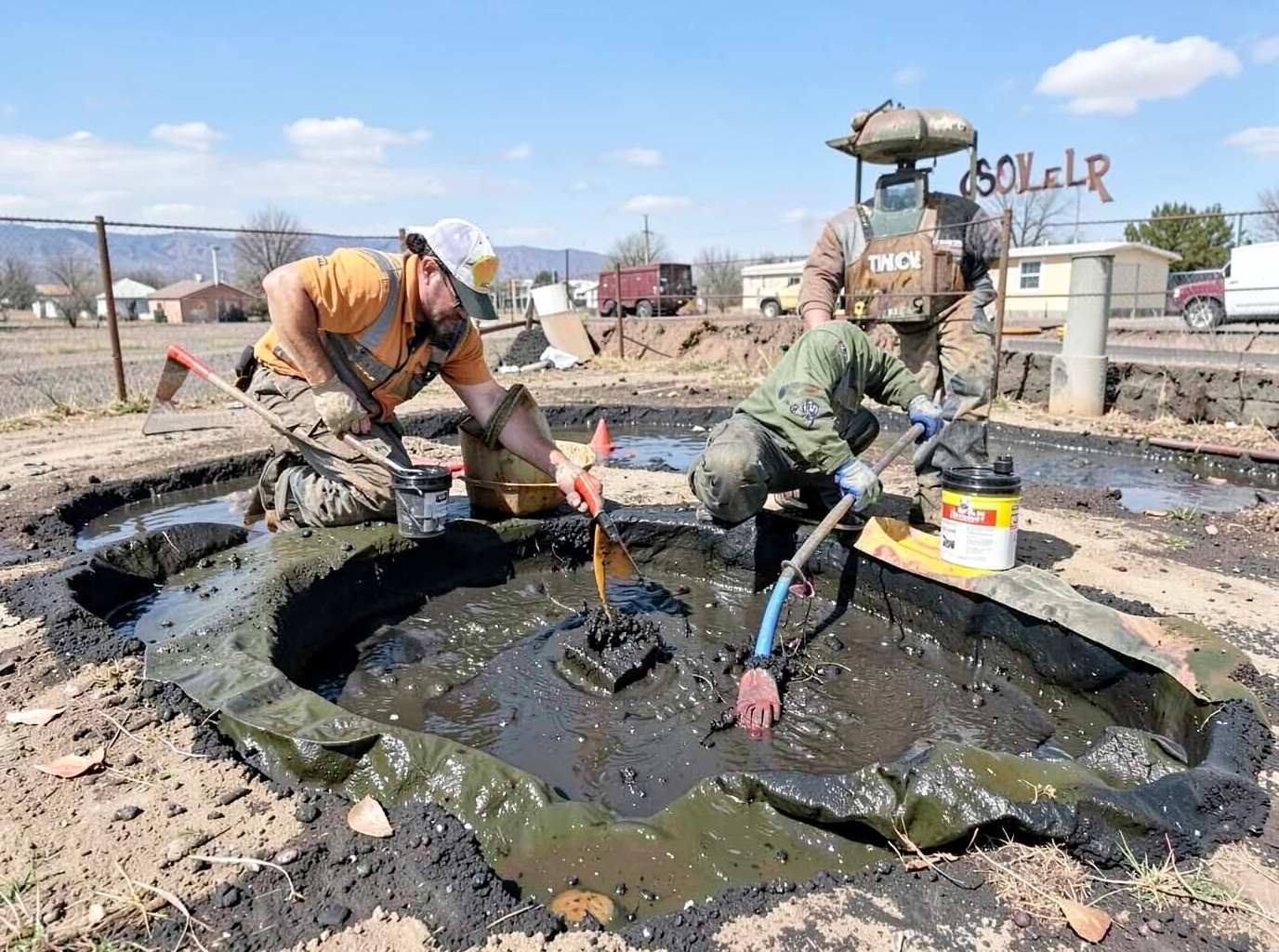
Roswell Sewage Response serves properties in the Downtown Roswell Historic District where narrow streets and older sewer lines around Main Street and Virginia Avenue increase the chance of backups reaching basements and crawl spaces. Crews from the shop at 300 S Kansas Ave respond to calls from homes built before 1950 that still rely on clay or cast-iron pipes prone to root intrusion and joint failure. Work often starts with containment along the alleyways behind the courthouse and historic storefronts to limit spread into adjacent structures.
Hot summer temperatures in Chaves County speed up bacterial growth after a backup while mild winters allow year-round service calls without freeze delays. Technicians extract water, remove affected flooring in adobe and brick buildings, and use air movers suited for the district's tight lots where equipment access is limited by fences and shared walls. Restoration focuses on drying wall cavities without disturbing historic plaster or woodwork near the UFO Museum and nearby shops.
Service extends to the edges of the district bordering North Park and Berrendo where storm drains can back up during rare heavy rains and push sewage into lower-level units. Property owners along these blocks receive same-day assessments that account for the semi-arid soil's poor drainage and the need to protect nearby foundations from further settling.
Around Downtown Roswell Historic District
We regularly work near:
- 📍International UFO Museum and Research Center
- 📍Chaves County Courthouse
- 📍Historic Main Street
- 📍Roswell Museum and Art Center
- 📍First Baptist Church
Sewage Backup Cleanup in Downtown Roswell Historic District — Local Notes
- •Many homes in the historic district sit on narrow lots with limited side access, requiring equipment to be carried through front doors or rear alleys rather than driven to the foundation.
- •Older clay sewer lines common under pre-1960 houses along Main Street and 2nd Street frequently crack at joints, allowing roots from mature street trees to enter and cause repeated backups.
- •Semi-arid conditions mean sewage dries into dust quickly in summer, increasing airborne contaminants inside tightly sealed historic buildings that lack modern ventilation.
- •Mild winters keep soil workable year-round but allow slow leaks to saturate adobe foundations near the courthouse without obvious surface signs until floors begin to buckle.