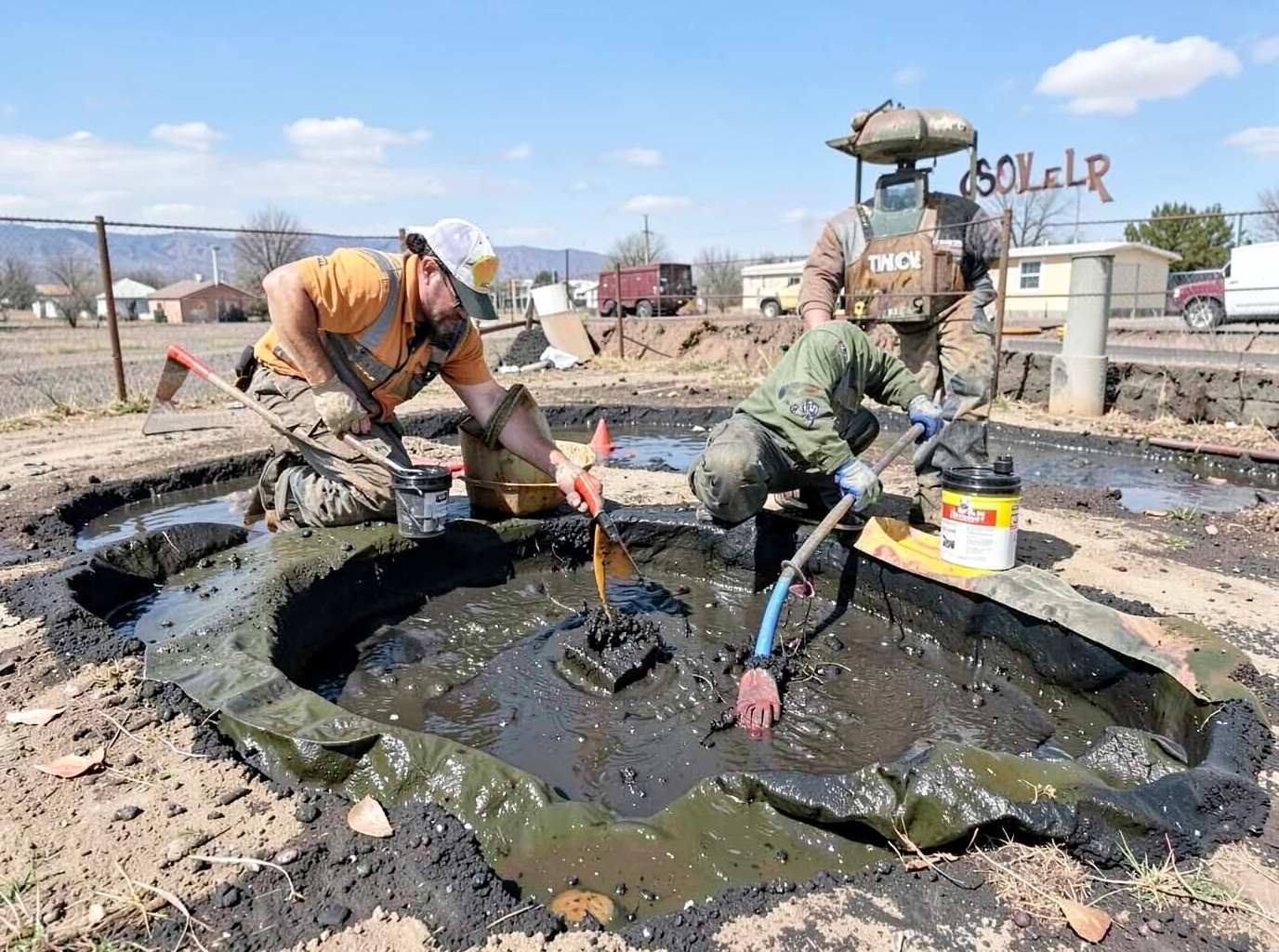
Roswell homes built before the 1970s in neighborhoods like North Park and Berrendo often have clay or cast-iron lines that shift with the semi-arid soil cycles of hot summers and mild winters. Recurring backups usually trace to root intrusion from nearby trees or partial collapses that standard rodding never fully resolves. We map the line with camera equipment, then decide between sectional repairs and full lining based on how far the failure runs toward the main in East Grand Plains.
Heavy monsoon bursts in Chaves County can overwhelm older municipal laterals shared with properties near the Walker Air Force Base Museum area. When backups repeat every few months, the issue is rarely just the fixture trap. We isolate the cleanout, pressure-test segments, and check for illegal connections from nearby irrigation that push water back into the line during summer irrigation peaks.
Mild winters keep ground temperatures stable, so pipe joints rarely freeze but do dry out and separate over decades. In these cases we install backflow valves at the foundation wall and recommend periodic jetting schedules timed before the spring rains arrive from the direction of Artesia and Carlsbad.
Cleanup after each event must include removal of contaminated drywall up to the flood line and treatment of subflooring with antimicrobial agents rated for porous materials. Skipping the hidden wall cavities leaves spores that reactivate on the next backup.
Technician insight
In Roswell the thing that catches most people out with recurring sewage backup cleanup is the combination of 1950s-era cast-iron lines under North Park homes and the way our semi-arid summers dry the soil, opening joints that then take in roots during the next monsoon. Homeowners keep calling for snaking when the real fix is mapping the line once and deciding on lining before the next rain event.
North Park Recurring Backup
A homeowner in North Park reported backups every six weeks after heavy summer rain. Camera work showed roots at two joints 18 feet from the cleanout. We performed sectional lining on the affected run, installed a backflow valve at the foundation, and scheduled annual jetting. No further backups occurred through the following monsoon season.
Recurring Sewage Backup Cleanup Services We Offer
✓Root Intrusion Removal
Mechanical cutting and chemical root control for lines serving homes in Berrendo and North Park where tree roots repeatedly enter joints.
✓Sewer Camera Inspection
Full-length video inspection from the cleanout to the street main to locate recurring failure points before lining or repair.
✓Pipe Lining Rehabilitation
Trenchless epoxy lining of damaged sections that prevents future root regrowth without digging up established yards.
✓Backflow Prevention Installation
Placement of code-compliant backflow valves at the foundation to stop municipal surges from re-entering the home.
✓Grease and Debris Jetting
High-pressure jetting of main lines serving older Downtown Roswell restaurants and multi-unit buildings to clear recurring grease caps.
✓Sump Pump and French Drain Upgrade
Installation or repair of exterior drainage tied to the sewer lateral to reduce hydrostatic pressure during monsoon events.
Recurring Sewage Backup Cleanup Cost in Roswell, NM
| Service | Typical Range | What Affects It |
|---|---|---|
| Camera Inspection And Report | $250–$400 | Longer laterals in East Grand Plains increase time on site. |
| Root Cutting And Treatment | $350–$650 | Multiple access points or heavy root mass in older North Park yards. |
| Trenchless Pipe Lining | $2,800–$5,200 | Length of run and number of bends from house to main. |
| Backflow Valve Installation | $450–$750 | Type of valve and whether excavation at foundation is required. |
Ranges are typical for Roswell, NM and confirmed with an exact written quote before any work starts.
How it works
- 1
Site Assessment
We locate all cleanouts, run a camera from the house to the street, and note soil conditions around the foundation in the target neighborhood.
- 2
Containment And Extraction
We isolate the affected plumbing, extract standing water, and remove saturated materials before odors migrate through the semi-arid dry air.
- 3
Source Repair
We perform the chosen repair or lining, then test the line under pressure to confirm the recurrence path is sealed.
- 4
Final Sanitation And Prevention
We apply antimicrobial treatment, install any backflow devices, and set a follow-up jetting schedule before the next seasonal rain.
Pricing
Pricing depends on line length, access, and whether lining or excavation is needed.